Introduction
The hardest part of building a multi-agent system is rarely the idea. It is the hour you spend working out which parameters the API actually wants, how a hierarchical swarm differs from a concurrent one in practice, and whether streaming works the way you assumed it does. Documentation answers the first question. Working code answers all three.
So we published the working code. The Swarms API Examples repository is an open-source collection of more than 100 runnable scripts for the Swarms API, organized so you can find the one closest to what you are building, run it, and edit it into your own system. Every example is meant to execute as written once you have an API key. Nothing is a fragment or a sketch.
What is in the repository
Single agents and coordinated swarms. The examples start at the beginning: one agent, one prompt, one response. From there they move through multi-agent setups where several agents share a task and hand work between each other. If you have never called the API before, the getting-started scripts are the fastest path from zero to a response.
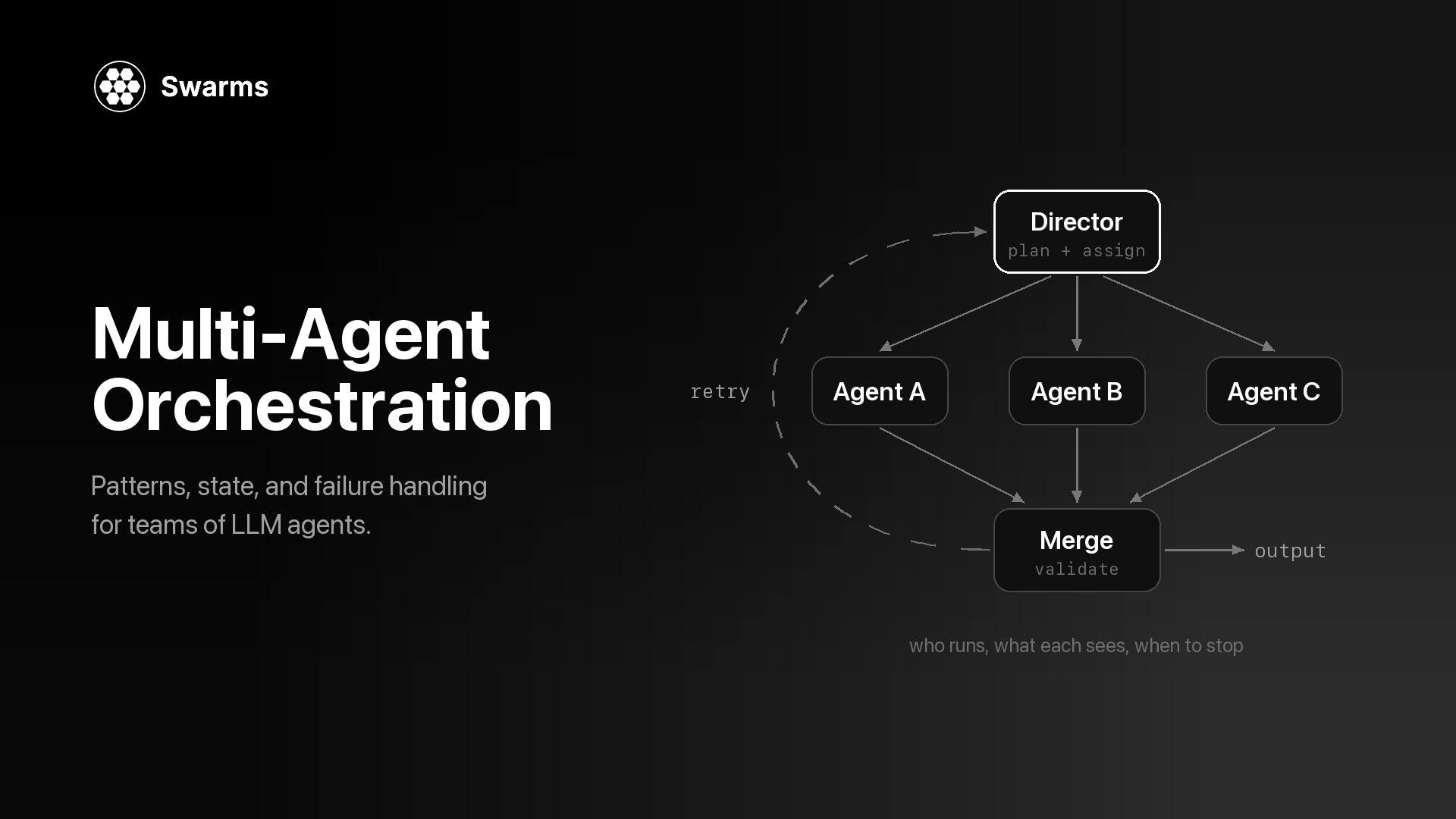
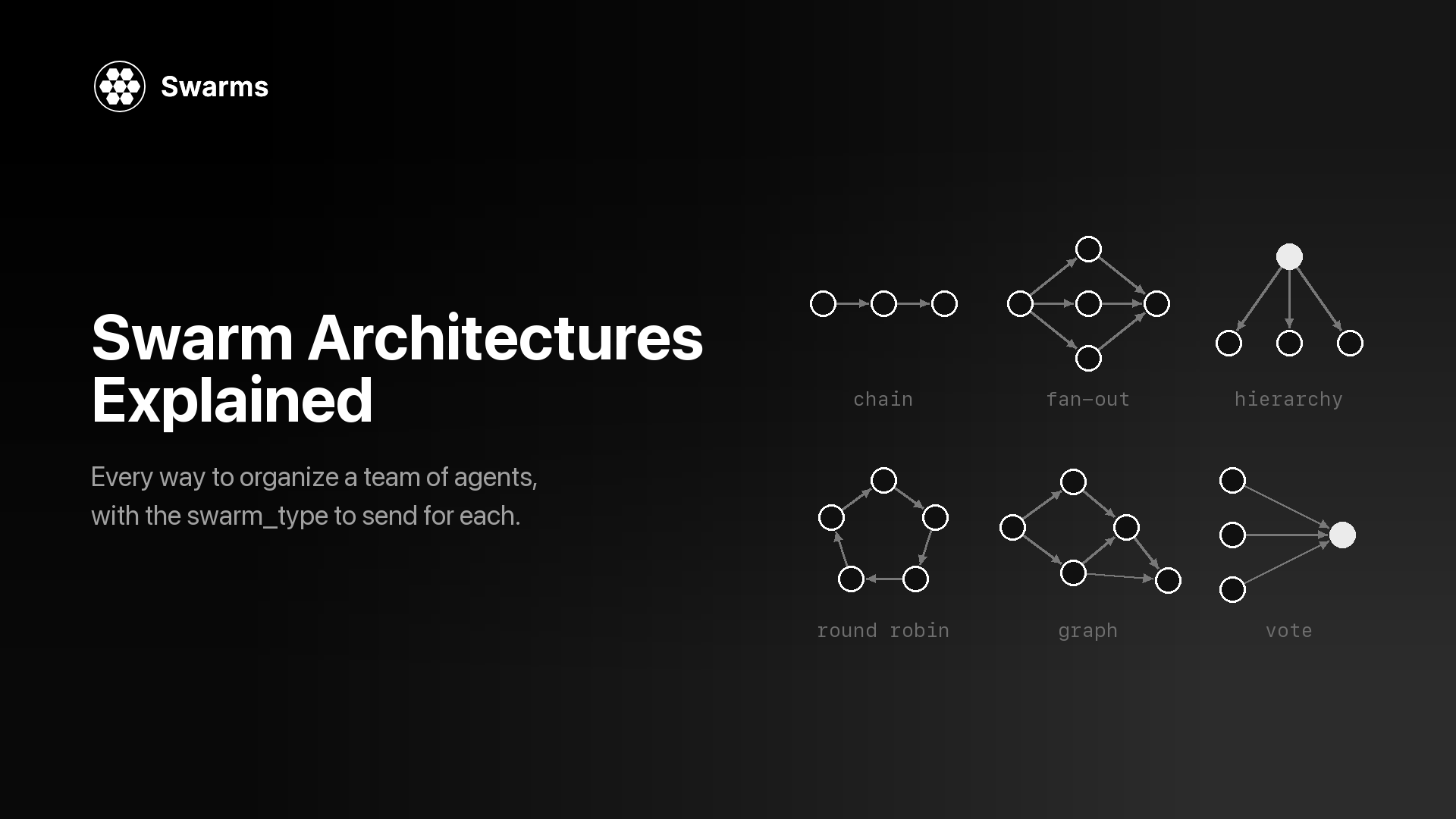
Every orchestration pattern. Sequential workflows where agents run in order, concurrent workflows where they run at once, hierarchical swarms with a director delegating to workers, and graph workflows where you define the dependencies and let the structure decide execution order. Each pattern gets its own example, which makes the differences between them concrete rather than theoretical. Choosing an architecture is much easier when you can run all four against the same task and compare the output.
Frontier model integrations. GPT-5, Claude, Gemini, Grok, DeepSeek, Groq, and OpenRouter each have examples showing exactly how to point an agent at them. Swapping the model behind an agent is usually a one-line change, and these scripts show you which line.
Real industry use cases. Healthcare, finance, marketing, and software engineering examples built around problems those fields actually have, not generic demos. They are useful as starting points and also as evidence of what a well-scoped agent system looks like in a specific domain.
The full surface of the platform. SDK usage and raw cURL calls for anyone working outside Python. MCP examples for connecting external tools. Streaming for token-by-token output, reasoning examples for models that expose their thinking, vision examples for image input, tool-calling examples, and platform utilities for the operational work around your agents.
How to use it
Clone the repository, add your API key, and run any script in it. Most people will get further faster by opening the example nearest their use case and modifying it than by reading the reference documentation front to back. Both are available, and they complement each other.
The repository is open source, so pull requests are welcome. If you build something with the API that would have saved you time as an example, it probably belongs in there.
Getting started
- Sign up at cloud.swarms.world
- Generate an API key at cloud.swarms.world/api-keys
- Build and deploy agents and swarms on any frontier model
Conclusion
Examples are the shortest distance between an idea and a running system. This repository exists so that the time you spend on a multi-agent project goes into the part that is specific to your problem, rather than into rediscovering how the API is shaped.
Clone it, run something, and build from there.
Links and Resources